Your own design studio.
A full design studio inside the coding agent you already use. One command, free, nothing leaves your machine but the model calls you already make.
/plugin install desk --marketplace adityareddy-dev/deskstudio
- Free, MIT
- no account, no sign-up
- 42 desks
- each one a brief you can read
- 15 pieces
- signed off, with score and cost
- 6 jobs open
- pick one
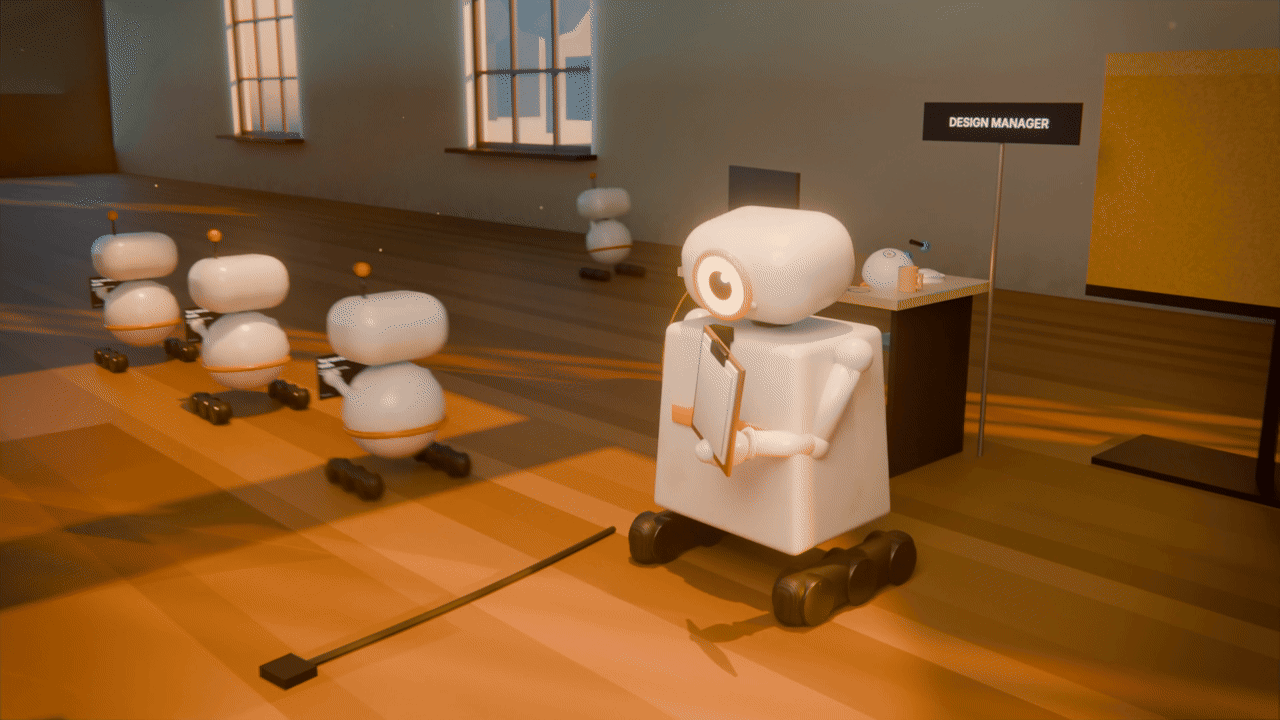
Watch the studio work.
Every desk is a small bot at its own desk. It wakes up while its agent works and goes back to sleep when it is done. The job moves along a track from the brief to the sign-off, and every rough, pick and score lands on the board. It runs on your machine, on 127.0.0.1.
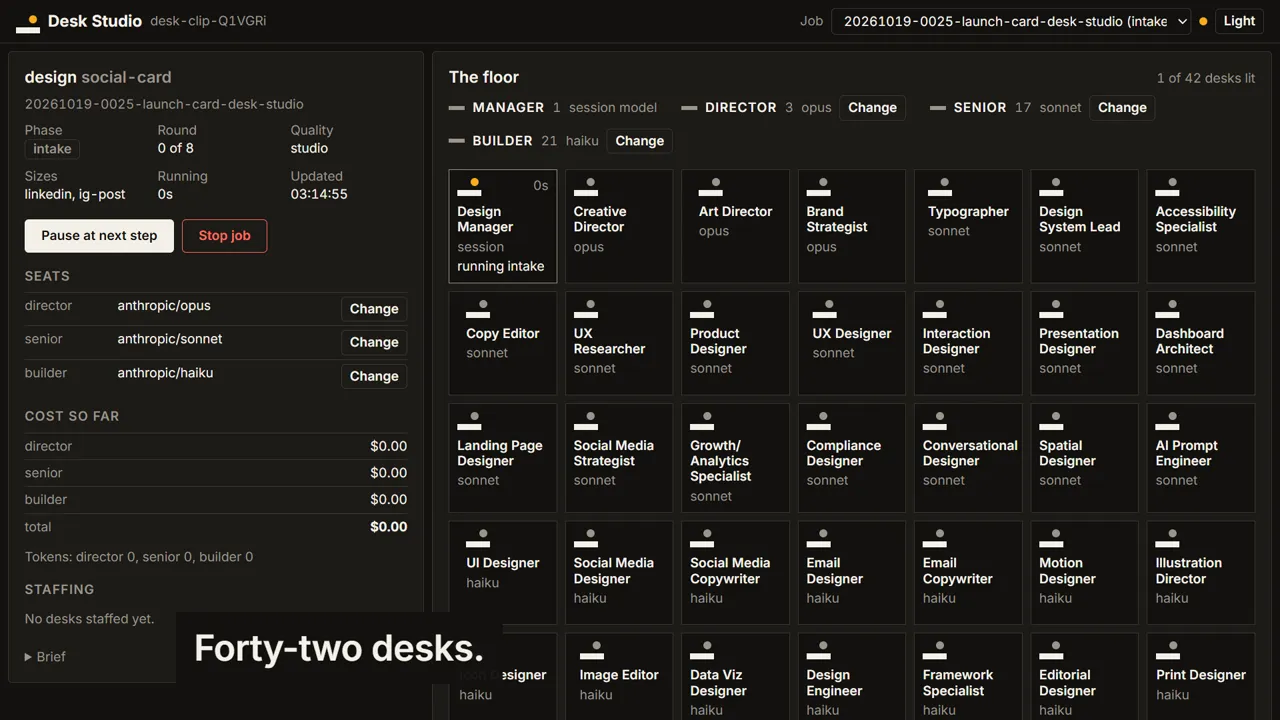
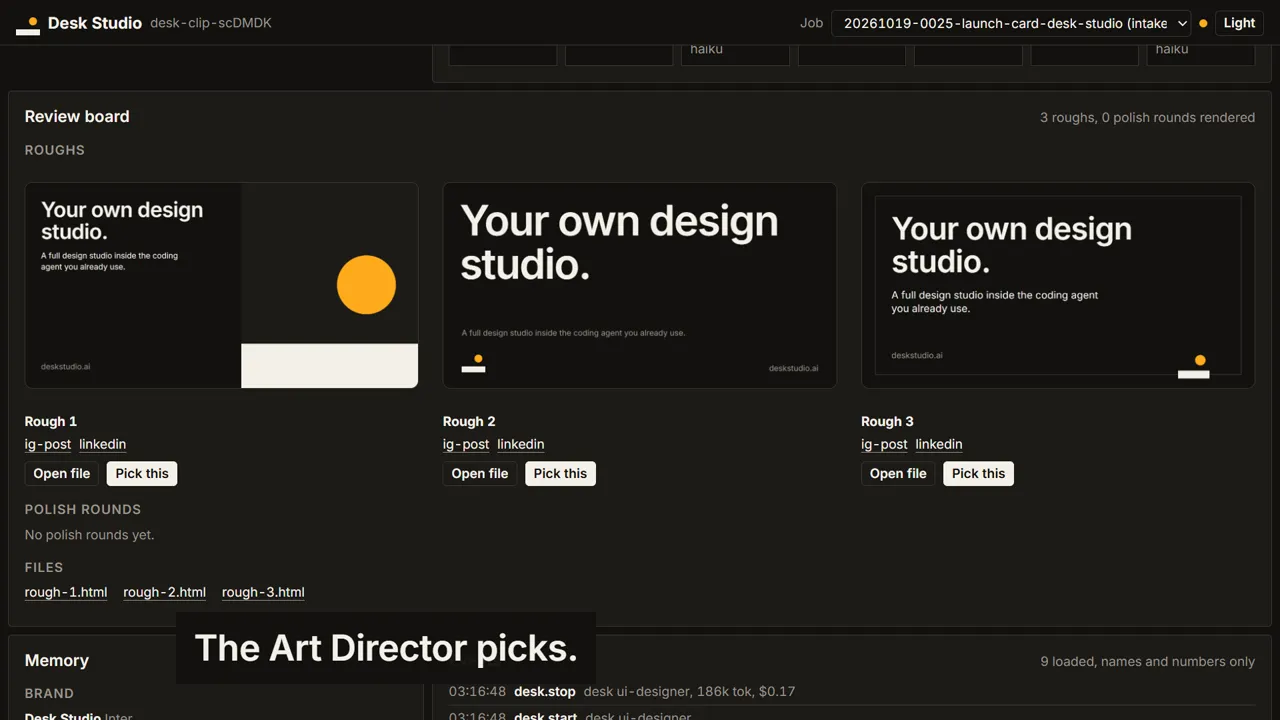
Steer it while it runs.
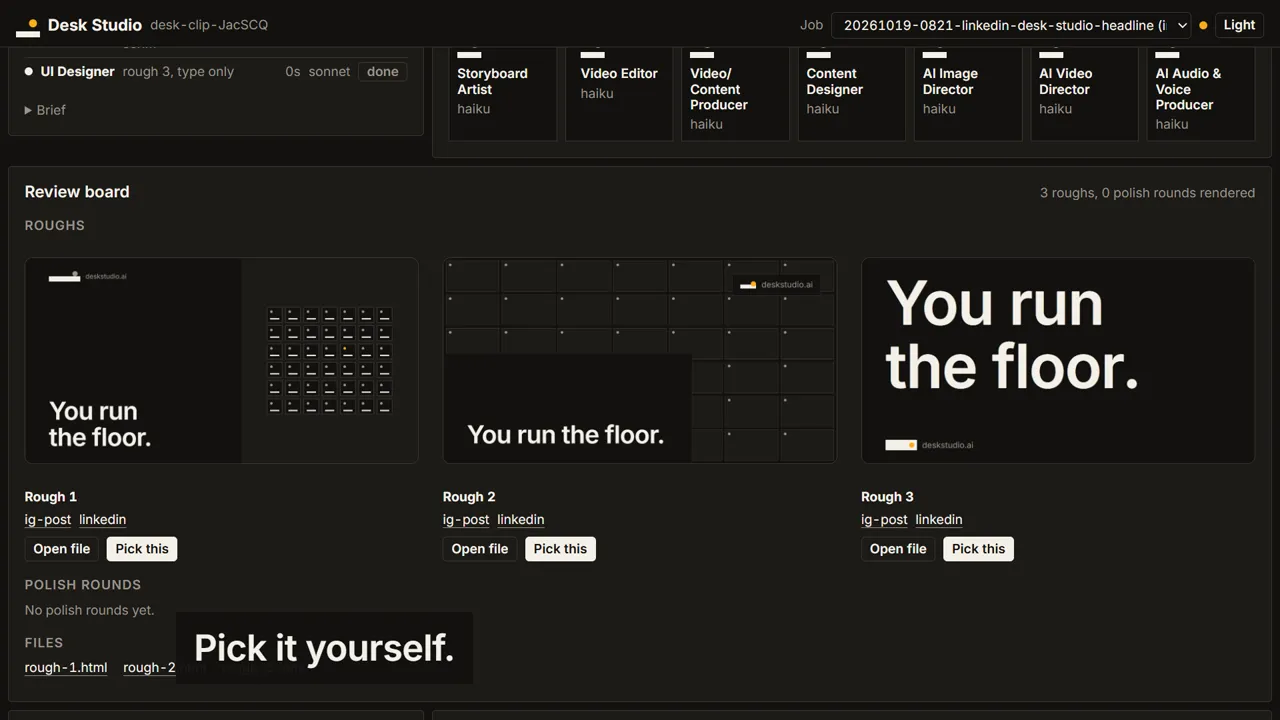
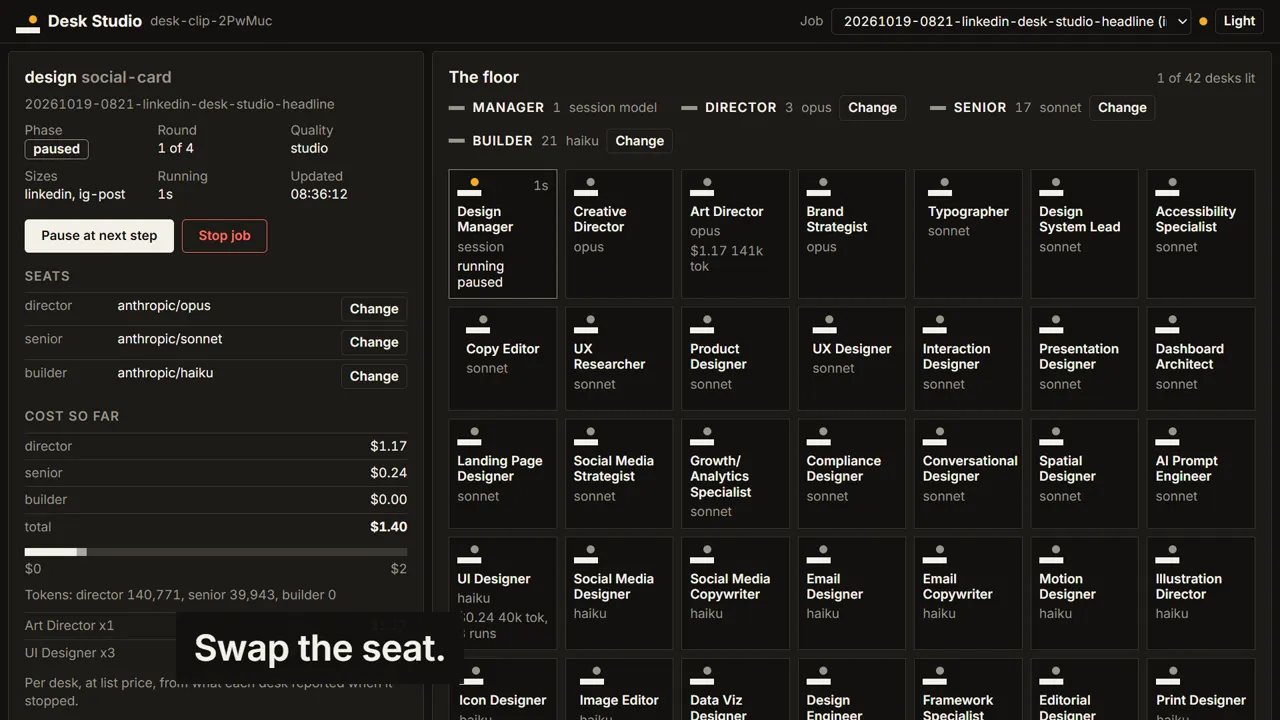
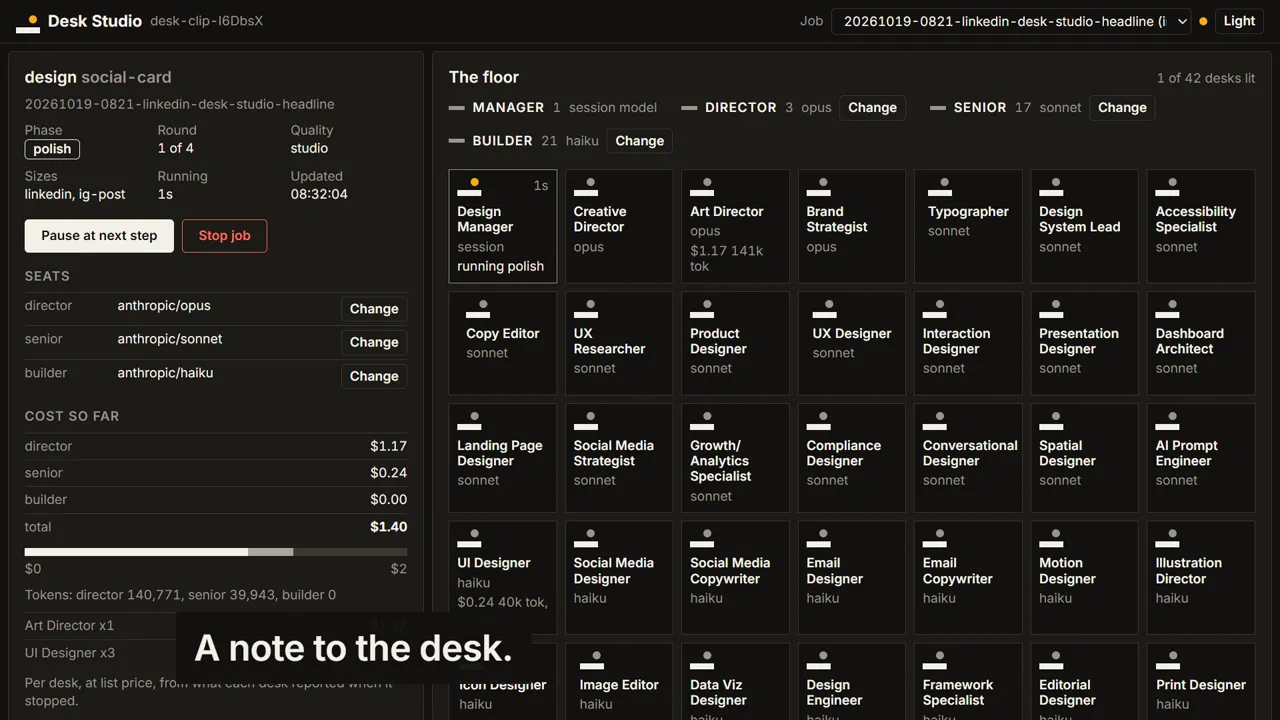
Every control is a write to a file the Design Manager reads before its next step: pause, continue or stop, move a tier or one desk to another model, write a desk a note, pick a rough yourself, approve a sign-off under the bar or send it back.
Every control
- Pause at the next step, continue, stop.
- Move a tier or one desk to another model, for this job or as the default.
- Write a desk a note for its next prompt.
- Pick a rough yourself, over the Art Director.
- Approve a sign-off under the bar, or send it back with notes.
Nothing interrupts a desk in the middle of a step. What each control writes.
What a run looks like
How a job runs.
You type one line. The Design Manager staffs the job, three roughs come back, the Art Director picks one, a cheaper model polishes, proof checks the pixels, and the Creative Director signs it off or sends it back with notes.
- 1
Roughs
Three directions from the brief and the brand.
- 2
Pick
The Art Director looks at the renders, picks one and writes the notes.
- 3
Polish
The builder desk revises with the notes and the screenshot.
- 4
Proof
Contrast on the rendered pixels, overflow, safe zones, palette, type scale, copy present.
- 5
Sign-off
Pass is every axis at 8 or above and the average at 8.5 or above.
The launch-card job, with its real numbers
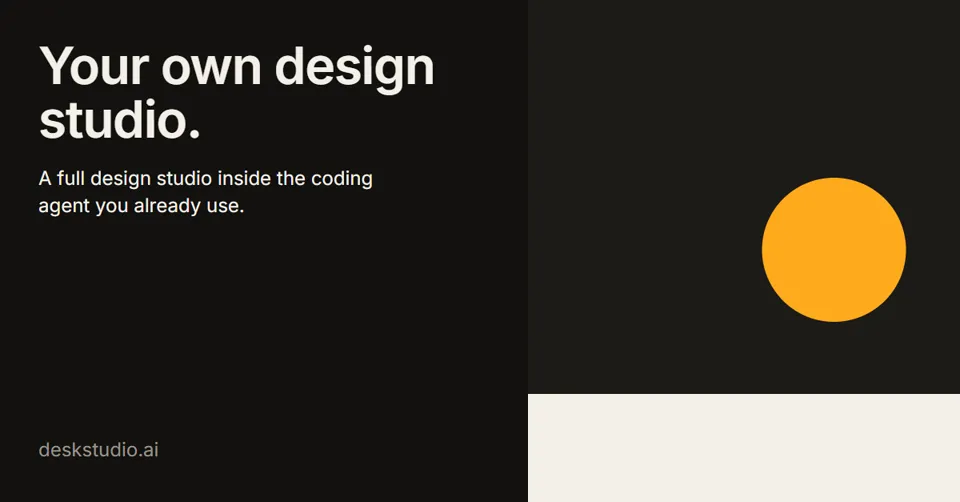
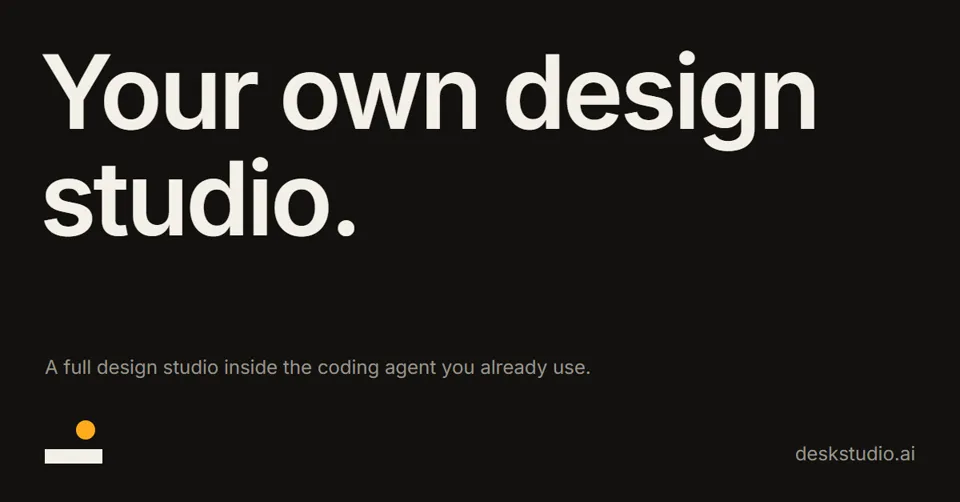
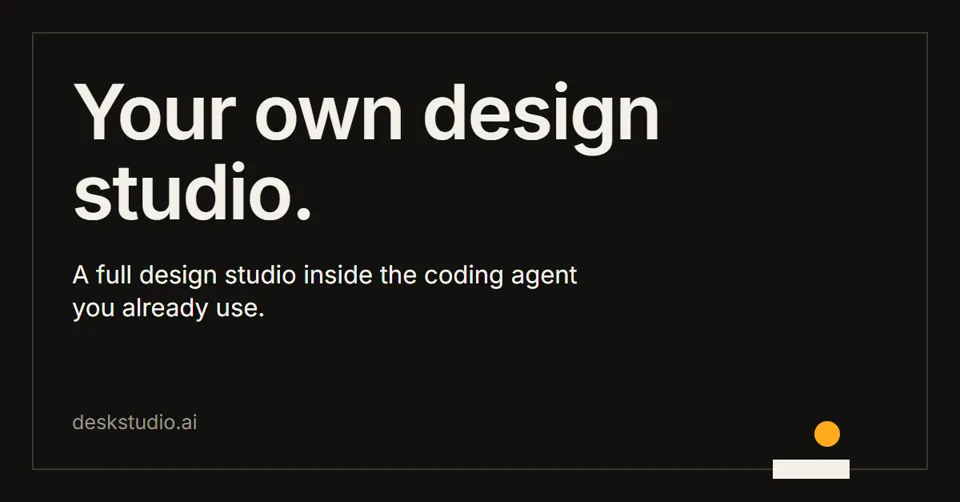
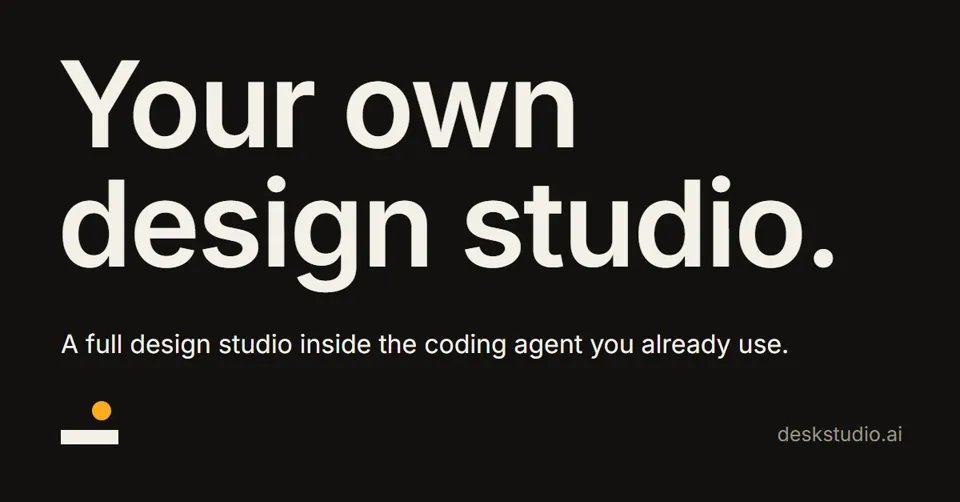
This is the launch card job, retold with its real numbers.
Roughs, pick, polish, proof, sign-off.
Every visual job runs the way a studio runs. This is the launch card above, as it happened.
Roughs
The UI Designer makes three directions at the senior model from the brief, the brand and the standard for the piece.
Pick
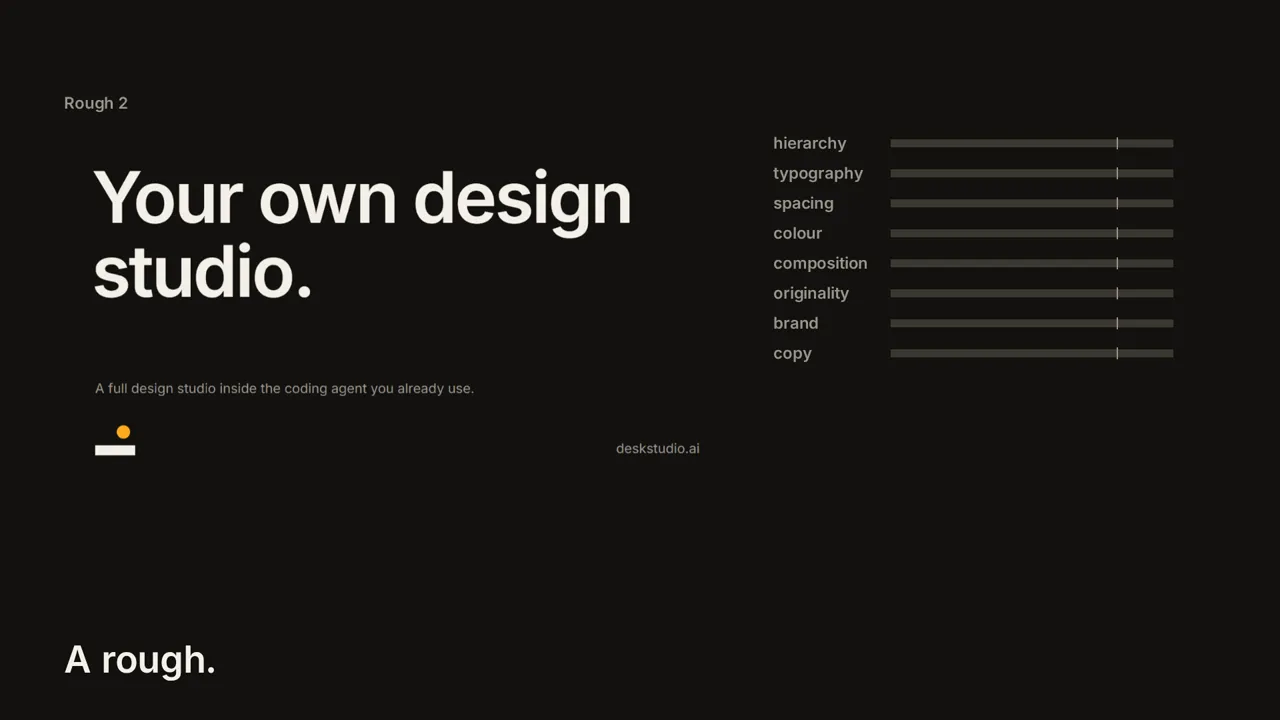
Rough 2: headline reads first at both sizes, only amber is the small lamp, fixes are type sizes not layout
Polish
Rounds are cheap, so this is where the iteration goes.
Round 1: 8.4. Round 2: 8.5. Round 3: 8.9.
Proof
No model in the loop. A failure goes back to the builder with the screenshot. It runs on every polished file.
Sign-off
The Creative Director scores eight axes.
Average 8.9, 3 of 8 rounds.
42 desks.
Each desk is a written brief: what it owns, how it decides, its checklist and what it hands to the next desk. The Design Manager staffs them per job.
Directors
The pick, the notes, the sign-off.
Seniors
The roughs, research, type, tokens, copy.
Builders
Every polish round, the making.
Missing a desk? A desk is one written brief and one registry entry. Write it, or ask for it first and say what it should own.
All desks and the dashboard
The three roughs run side by side and the rest in turn. Watch the floor.
Directors 3
the pick, the notes, the sign-off. Default model anthropic/opus.
- Creative Directordirection and sign-off against the rubric
- Art Directorthe pick, the notes, the pen on escalation
- Brand Strategistpositioning, the claim, voice, architecture, brand audits
Seniors 17
the roughs, research, type, tokens, copy. Default model anthropic/sonnet.
- Typographerpairing, scale, measure, leading, weights, optical details
- Design System Leadtokens, DESIGN.md, exports, consistency audits
- Accessibility SpecialistWCAG 2.2 AA beyond the automated checks, with code fixes
- Copy Editorcorrectness, consistency, clarity, the last read
- UX Researcheraudience, jobs, pains, evidence, research questions and plans
- Product Designerscope, the core flow, trade-offs, first version versus later
- UX Designerflows, wireframes, information architecture, interaction rules, edge cases
- Interaction Designerstates, gestures, transitions, feedback, clickable prototypes
- Presentation Designerslide systems and decks at 1920x1080
- Dashboard Architectdashboard information architecture, layout, density, states
- Landing Page Designerabove the fold, section order, pricing, conversion details
- Social Media Strategistthe plan, the calendar, launch sequences, platform rules, measurement
- Growth/Analytics Specialistthe metric, tracking plans, variant plans, honest reads, reports
- Compliance Designerconsent, privacy, email footers, accessibility obligations, regulated flows
- Conversational Designerdialogue, chat and voice flows, message types, guardrails
- Spatial Designerheadset and AR layout in metres and degrees, comfort, input fallbacks
- AI Prompt Engineerprompt packs, cross-tool variants, critiques, consistency strategies
Builders 21
every polish round, the making. Default model anthropic/haiku.
- UI Designerlayout, type, colour and composition in one self-contained file
- Social Media Designercards, stories, carousels, thumbnails, series consistency
- Social Media Copywriteron-card copy, captions per platform, carousel copy, alt text
- Email Designer600px table email that renders everywhere, dark mode, the bulletproof CTA
- Email Copywritersubject, preheader, body with one ask, sequences, transactional copy
- Motion Designermotion systems, micro-interactions, transitions, deterministic clips
- Illustration Directorillustration style, spots, hero art, diagrams, systems
- Icon Designericon grid, stroke, optical corrections, the set, the SVG contract
- Image Editorselection, crops and focal points, treatment, scrims, exports
- Data Viz Designerchart choice, honest axes, direct labels, colourblind palettes, inline SVG
- Design Engineerproduction HTML and CSS, components in the project's framework, states, performance
- Framework Specialistidiomatic components in React, Vue, Svelte, Next.js or Astro
- Editorial Designergrids, page systems, long-form hierarchy, figures, print PDFs
- Print Designertrim, bleed, safe area, ink, resolution, the print PDF and preflight
- Storyboard Artistbeat sheets, frames as HTML, eye path, caption timing, the hook frame
- Video Editorpacing, captions, platform specs, loops, QC, exports
- Video/Content Producerscripts with timings, series plans, the hook, the ask
- Content Designerheadlines, sublines, buttons, labels, empty states, errors
- AI Image Directorshot lists, direction, candidate selection, moodboards, fit
- AI Video Directorshot-by-shot direction, tool choice per shot, consistency, selection
- AI Audio & Voice Producervoiceover briefs, stings, UI sounds, music beds, loudness, rights
The Design Manager runs in your session on whatever model you run, and the other 41 desks run as subagents.
You run it from the dashboard.
A local page, nothing leaves your machine. Every control is a write to a file the Manager reads before its next step.
- Pause at the next step, continue, stop.
- Move a tier or one desk to another model, for this job or as the default.
- Write a desk a note. It goes into its next prompt.
- Pick a rough yourself, over the Art Director.
- Approve a sign-off under the bar, or send it back with notes.
The loops are above, and every control is in the dashboard guide.
One real job, run from the dashboard: paused after the roughs, the pick made by hand, the builder role moved from Haiku to Sonnet, and a note written to the UI Designer. It came back signed off at 8.5 in 2 rounds, $2.39 at list price.
Proof on real pixels.
Every polished file is rendered in Chrome at each size and checked on the pixels before the Creative Director scores it.
One launch card.
8.9signed offScores come from the studio's model reviewers, they are not independent benchmarks.
- Text contrast
- Overflow and clipping
- Safe zones
- Brand palette
- Type scale
- Copy present
Proof checks and the cost record
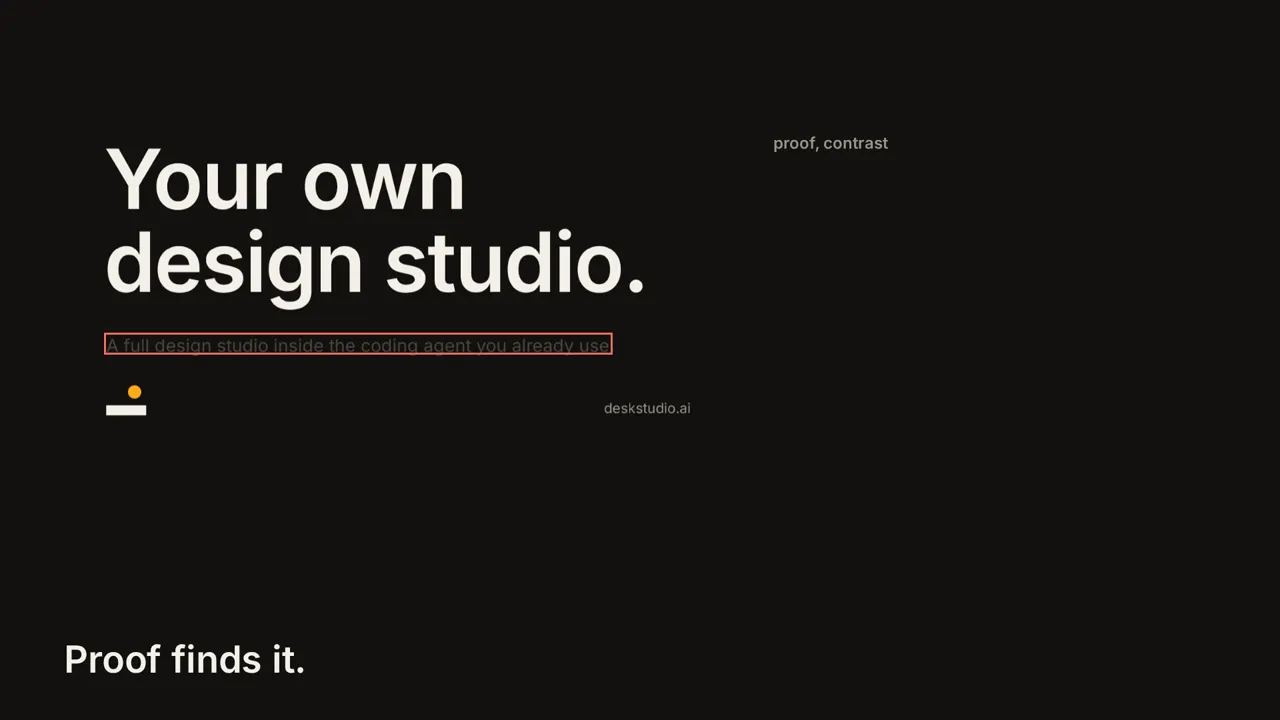
- Text contrast against the pixels behind it
- Safe zones per platform
- Colours inside the brand palette
- Type on the brand scale
- Every line of copy present
- Carousels consistent across slides
- Reading time and flashes in motion
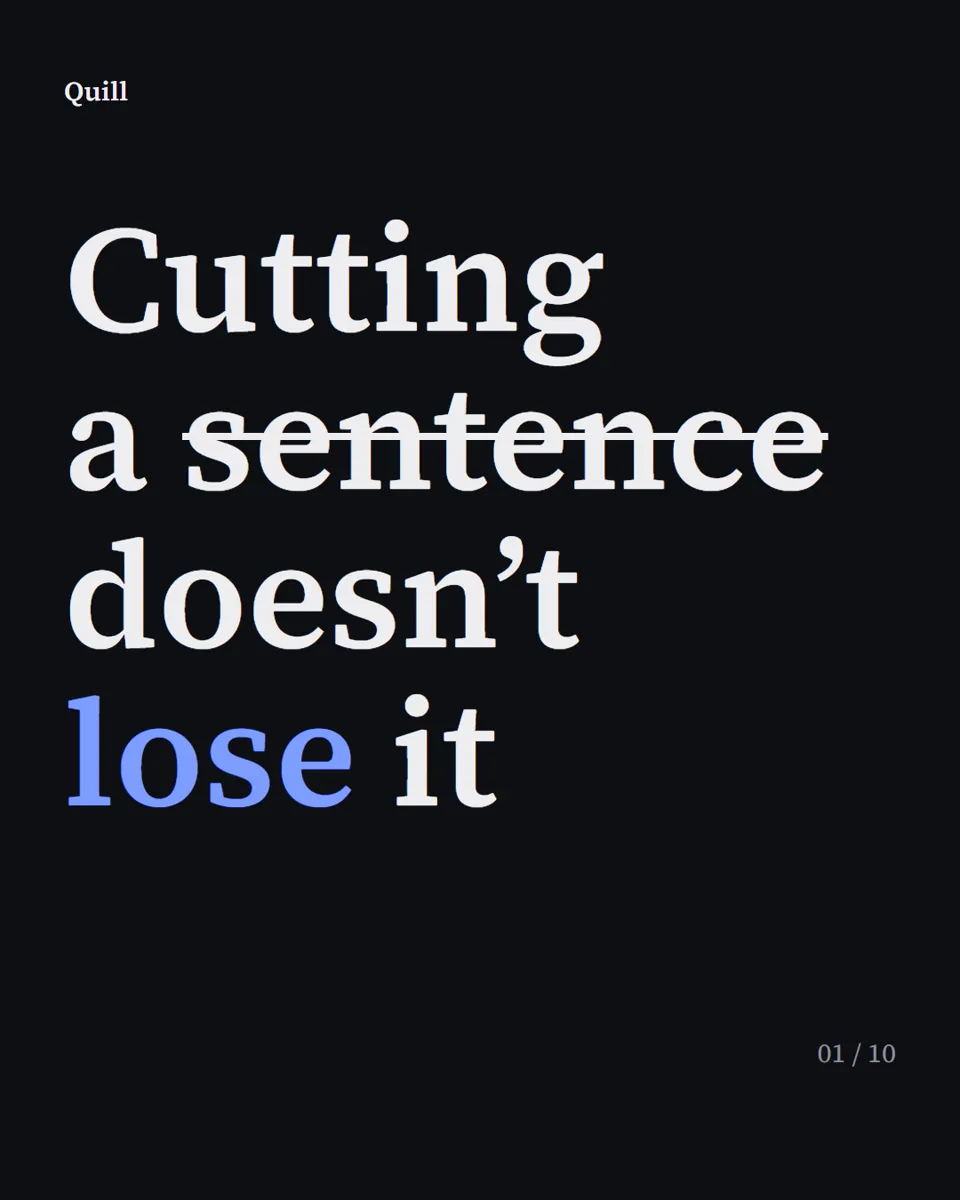
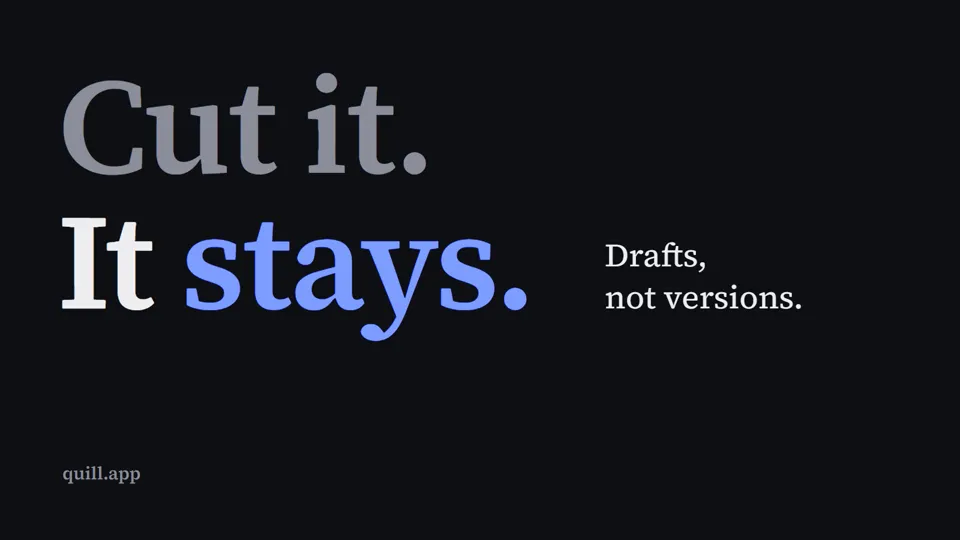
From the quill card job: proof failed twice before passing. Round 1 failed on the type scale, a 248px headline off the brand scale, capped at 232px. Round 3 failed because the X card's headline sat inside the left safe zone, and round 4 fixed it. Signed off at 8.9.
Cheap models make. Strong models judge.
Roughs come from the senior roles, every polish round from the builder roles, and the pick, the notes and the sign-off from the director roles. The dashboard shows what each desk cost at list price.
| Tier | Default | Does |
|---|---|---|
| director | anthropic/opus | the pick, the notes, the sign-off |
| senior | anthropic/sonnet | the roughs, research, type, tokens, copy |
| builder | anthropic/haiku | every polish round, the making |
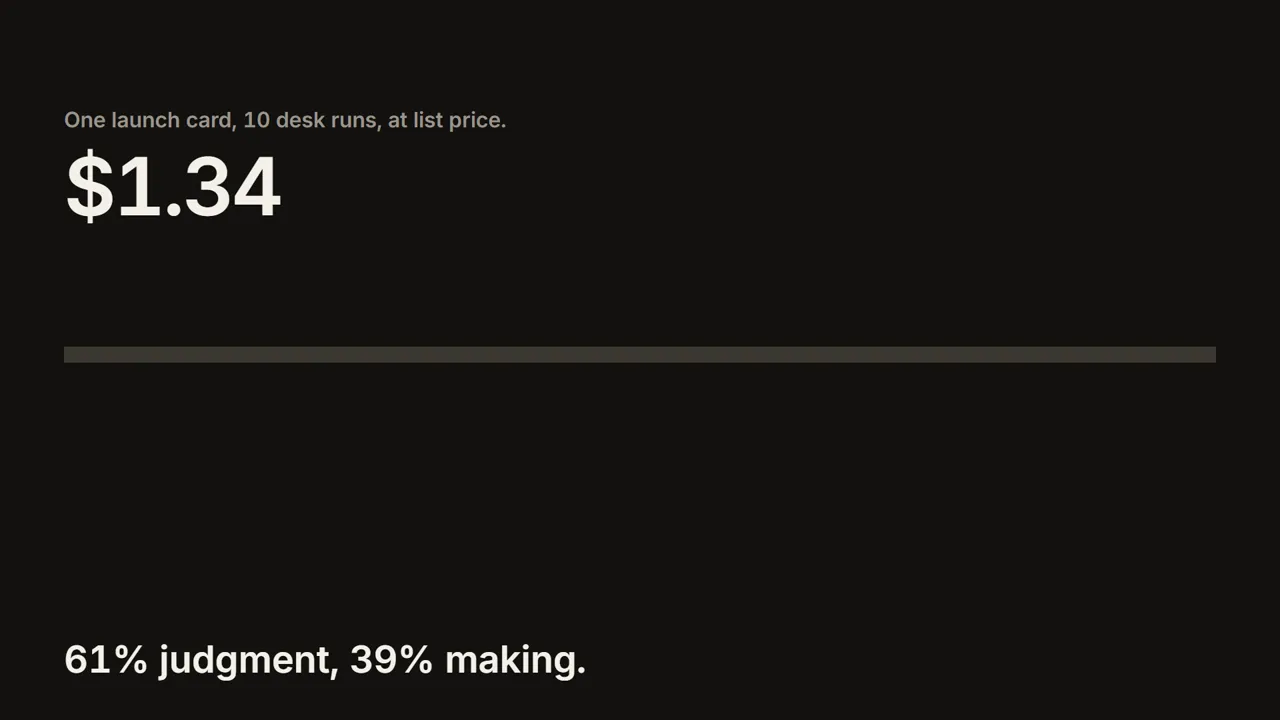
One launch card, $1.34 at list price.
Director $0.81, senior $0.43, builder $0.10. 61% went to judgment, 39% to making. 10 desk runs, 3 polish rounds, signed off at 8.9.
Made by the studio.
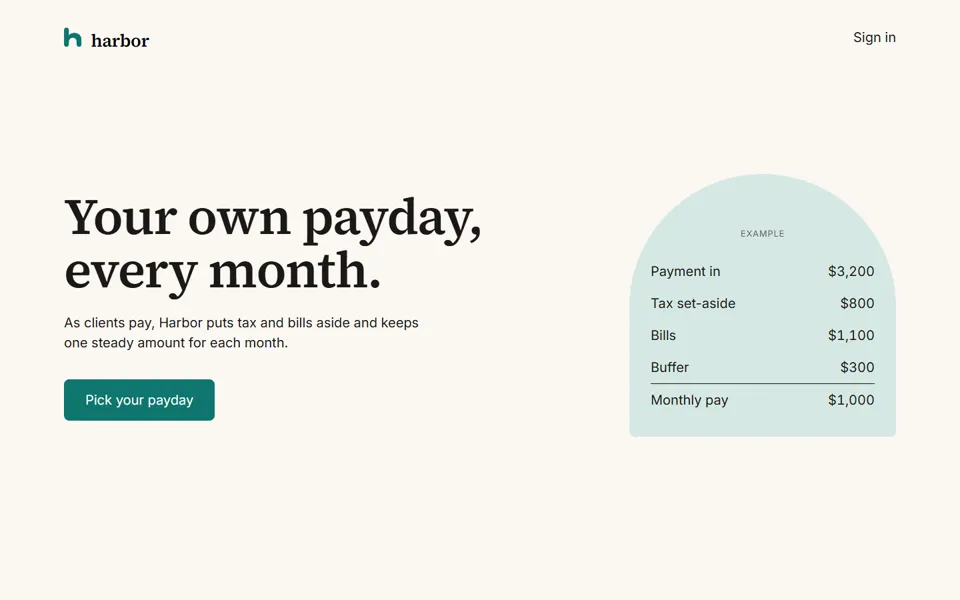
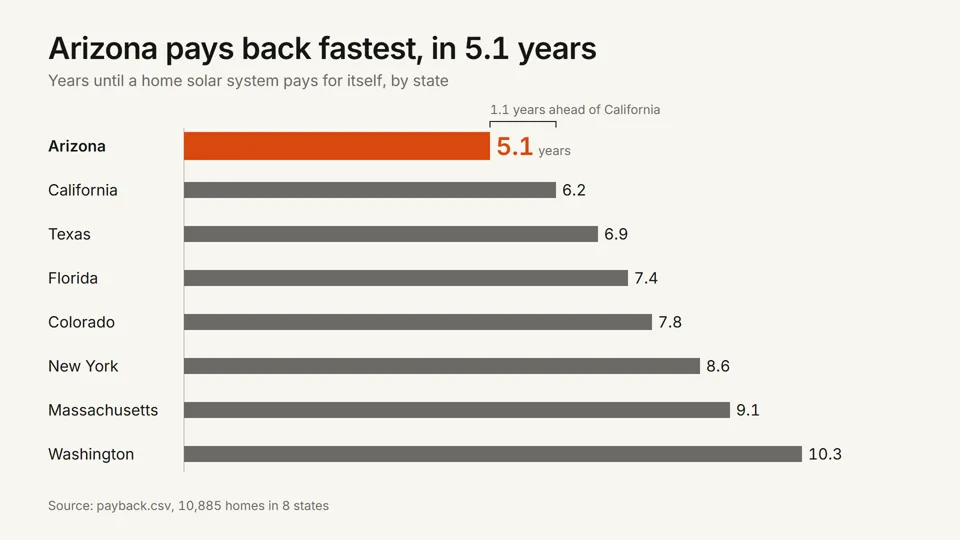
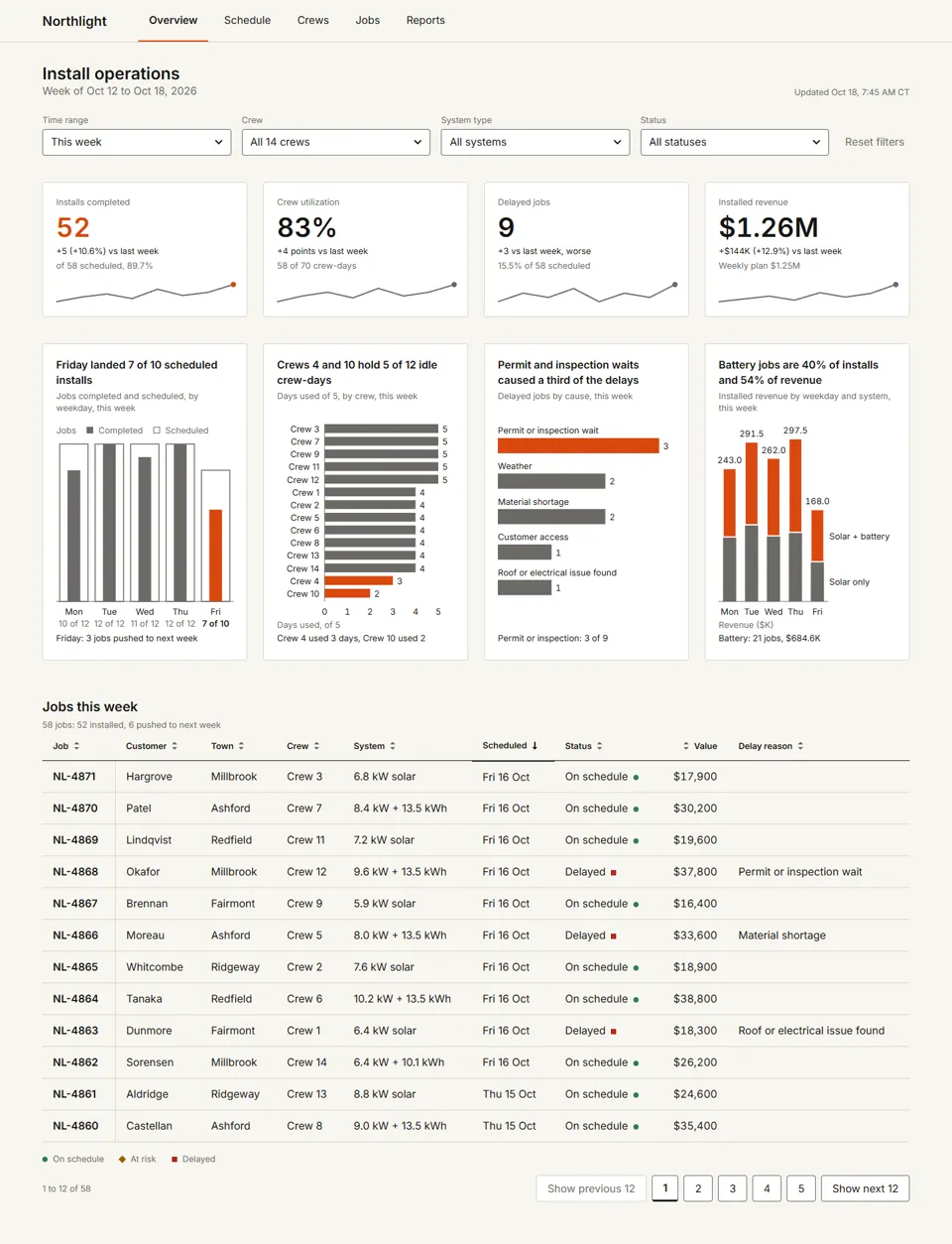
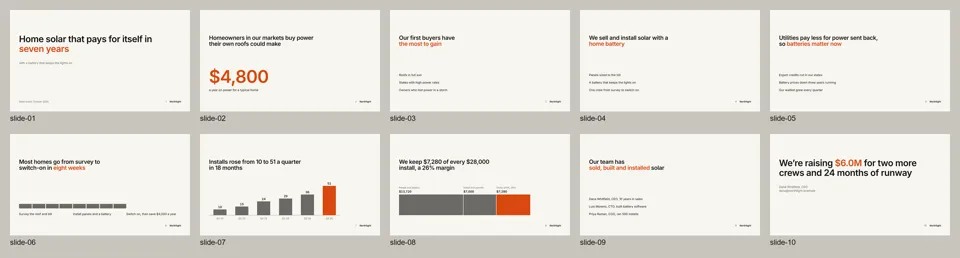
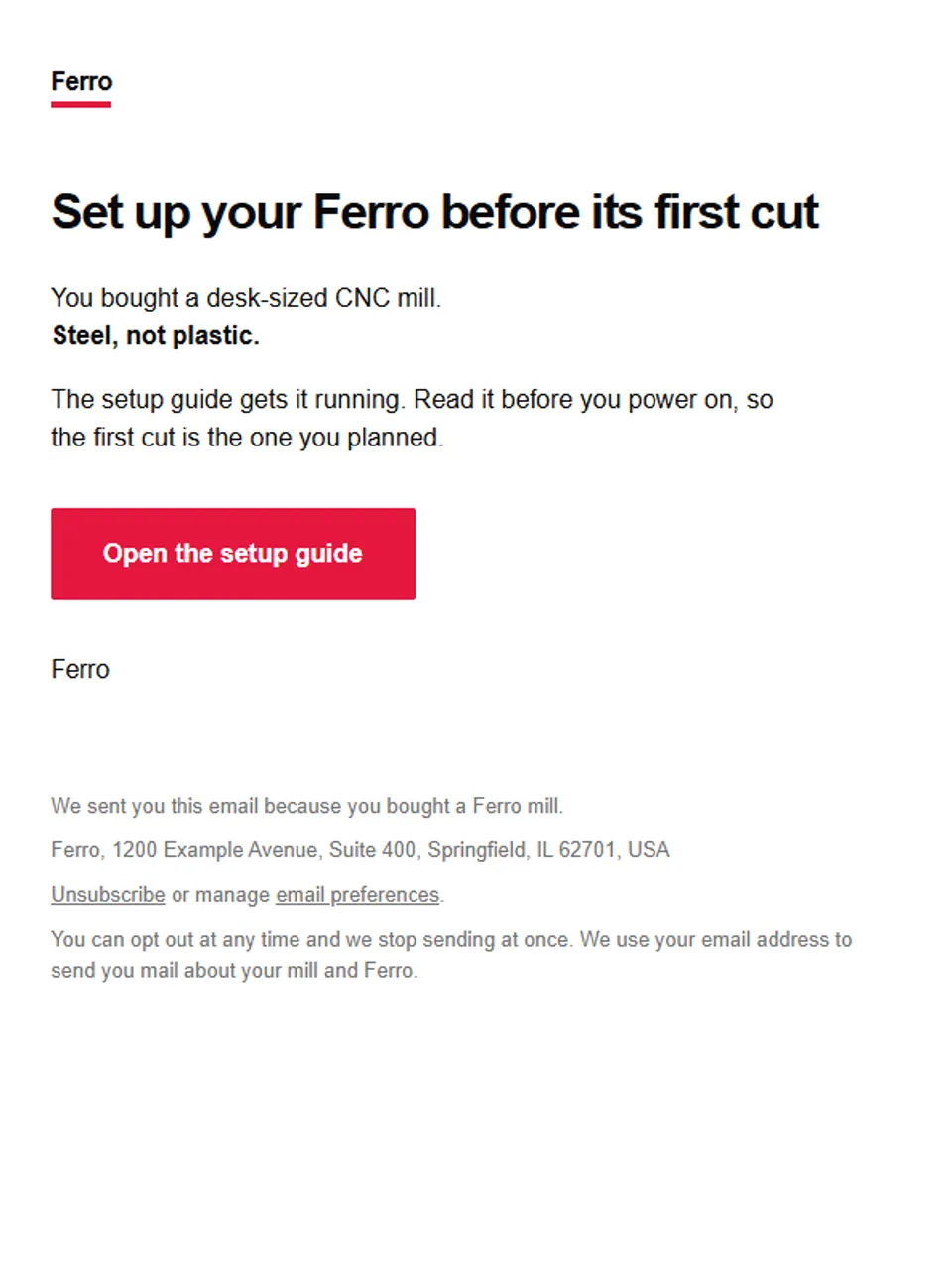
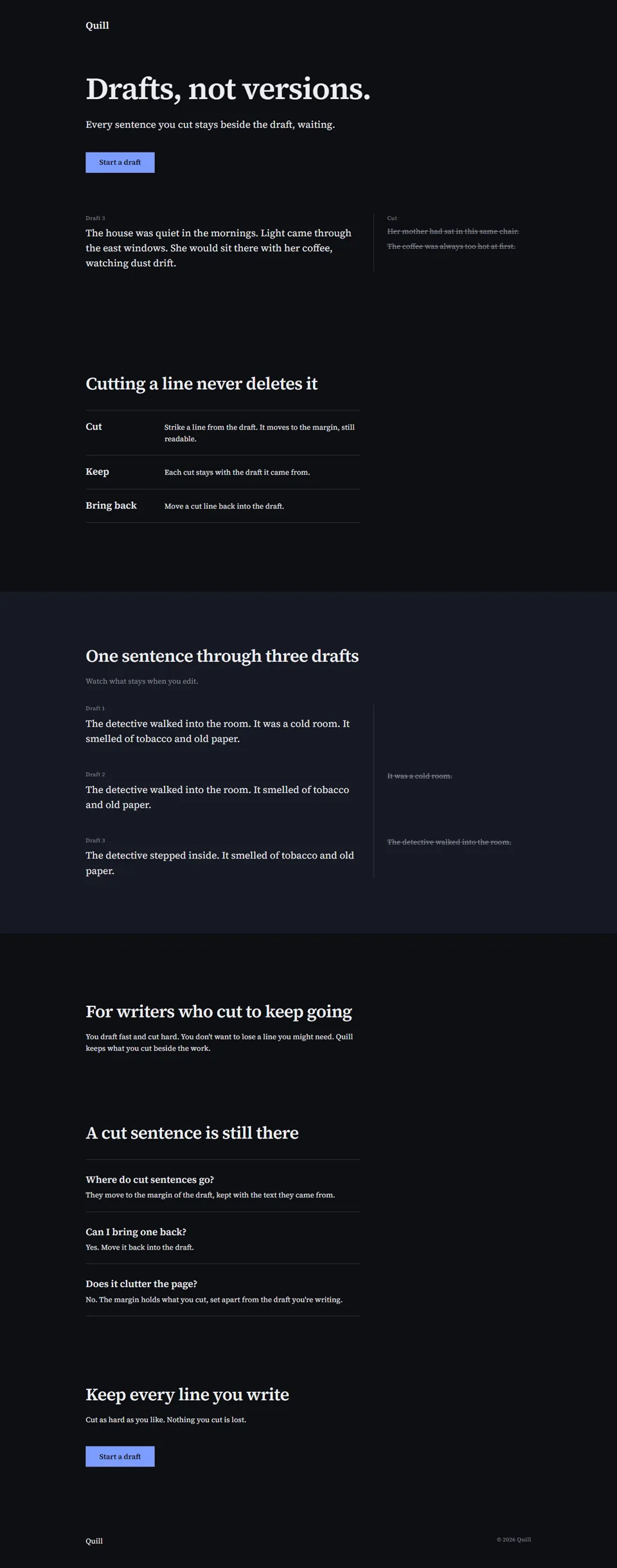
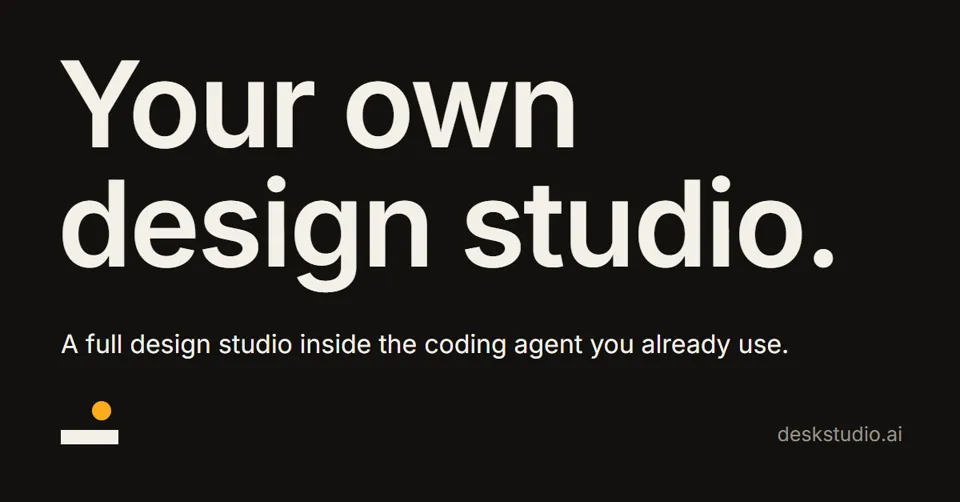
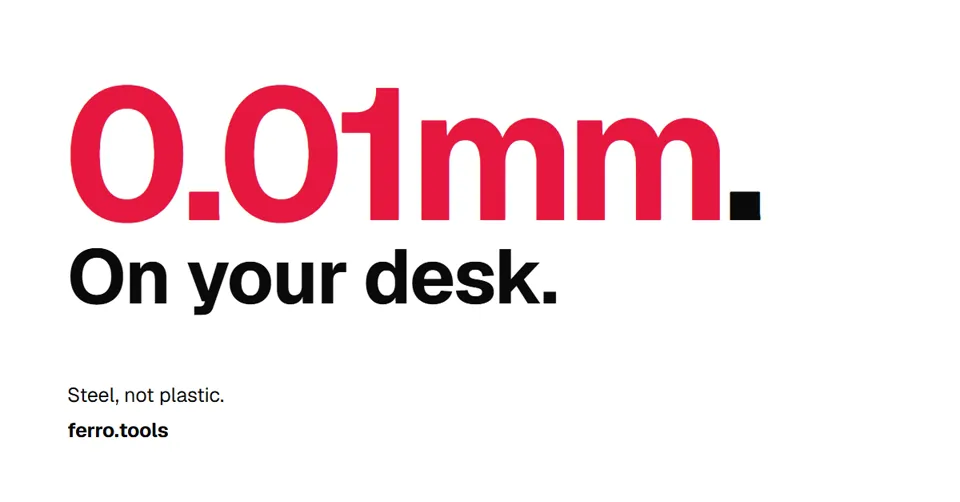
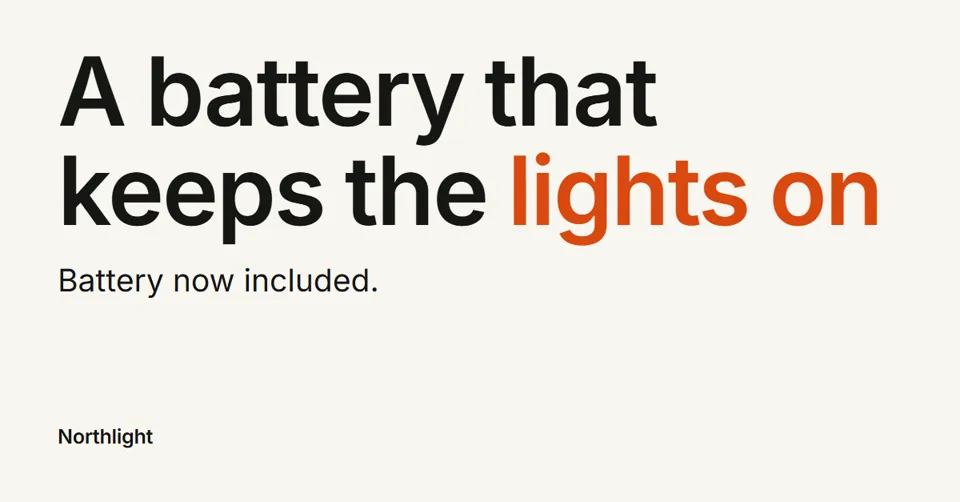
15 pieces for four made-up brands, one real site and the studio's own, each signed off by the Creative Director against the eight-axis rubric. The score and the cost under each one are from the run that made it. Scores come from the studio's model reviewers, they are not independent benchmarks.


Other agents.
The runner reaches each provider through the CLI you already have signed in, on the plan you already pay for.
npx deskstudio add
The runner takes design for social cards. For design work inside the codebase the agent plays the Design Manager from the briefs.
Agent support and provider models
| Agent | What you get |
|---|---|
| Claude Code | Everything: the 41 desks as native subagents with the repo's tools, the Manager in your session, the loop, proof, the dashboard, video. |
| Codex, Cursor, Gemini CLI, Copilot, Windsurf, OpenCode | npx deskstudio add writes a rules block the agent reads and copies the desk briefs. The runner takes design for social cards, with the same loop, proof and dashboard, and desks return files rather than editing the repo. The other commands are Claude Code only for now. The installer is tested for each of these agents, and jobs have completed through the Claude, Codex and Antigravity CLIs. |
Models per role.
API keys are the fallback. One provider is fine, and tiers can mix. Jobs have completed through the Anthropic, OpenAI and Google CLIs. Google uses Antigravity CLI.
| Provider | CLI | Roles |
|---|---|---|
| Anthropic | claude | director opus, senior sonnet, builder haiku |
| OpenAI | codex | director large, senior mini, builder nano |
| agy | director flash-high, senior flash, builder flash-low |
{
  "models": {
    "director": "anthropic/opus",
    "senior": "anthropic/sonnet",
    "builder": "openai/nano"
  }
}
Set once in .desk/project.json, or from the dashboard for one job.
Make your first contribution.
Six jobs are open. The four small ones name the files to read and the check to run, and none of the checks need a model call. The two new desks are bigger.
Cursor setup guide
Install twice in a throwaway project and write down what the second install keeps.
DocsCopilot setup guide
Check the instruction file and the desk folder, then install a second time.
TestsSafe-zone boundary tests
Boxes exactly on each edge, then one pixel outside.
TestsRequired-copy tests
Small made-up text boxes that should pass or fail the copy check.
New deskLocalization designer desk
One brief and one registry entry. Bigger than the rest.
New deskForm designer desk
One brief and one registry entry. Bigger than the rest.
Check that a job is open and unclaimed, then comment with what you plan to change. A failed install helps too, report it with the host, version and exact command. Remove private project content from logs.
From install to the dashboard.
- 1
Install
In Claude Code:
/plugin install desk --marketplace adityareddy-dev/deskstudioIn Codex, Cursor, Gemini CLI, Copilot, Windsurf or OpenCode, in the project:
npx deskstudio add - 2
Run a first job
Ask for something. In the other agents, plain words work too.
/desk:design a launch card for LinkedInThe files land in .desk/out/<job>/, with a note on who did what, the scores and the cost.
- 3
Open the dashboard
Once per project, then open the link it prints. Keep it open while the job runs.
/desk:dashboard setup
/desk:dashboard start
Outside Claude Code: npx --package deskstudio desk-dashboard setup, then start. How to read it is in the dashboard guide.
All of it, with older Claude Code versions and the runner, is in the install guide.
Every agent, step by step.
Claude Code, one line.
/plugin install desk --marketplace adityareddy-dev/deskstudio
On a Claude Code older than 2.1.275: /plugin marketplace add adityareddy-dev/deskstudio, then /plugin install desk@deskstudio.
Then ask for something.
/desk:design a launch card for LinkedIn
Other agents, one line in the project.
Codex, Cursor, Gemini CLI, Copilot, Windsurf or OpenCode: one line in the project.
npx deskstudio add
It writes .desk/, copies the desks to .agents/skills/desk/ and puts one marked block in the agent's instruction file. Every agent by default, one with --agent codex. Run it again any time, it only touches what sits between its markers.
| Agent | Where the block goes |
|---|---|
| Codex | AGENTS.md |
| OpenCode | AGENTS.md |
| Gemini CLI | GEMINI.md |
| Copilot | .github/copilot-instructions.md |
| Cursor | .cursor/rules/desk.mdc |
| Windsurf | .windsurf/rules/desk.md |
Then ask the agent in plain words, it reads the block and runs the studio.
design a launch card for LinkedIn
Or run it yourself: npx --package deskstudio desk-run design "a launch card for LinkedIn". The desks call models through the CLI you are already signed in to (claude, codex or agy) or a key (ANTHROPIC_API_KEY, OPENAI_API_KEY, GEMINI_API_KEY). npx --package deskstudio desk-run doctor shows which path it will take without making a model call. Files land in .desk/out/<job>/ either way.
FAQ.
Do I need another account?
Open source, MIT. No account, no sign-up.
What leaves my machine?
Only the model calls the desks make and a few research lookups. Jobs, renders, scores and the brand file stay in your project folder.
What does the score mean?
Scores come from the studio's model reviewers, they are not independent benchmarks.
Can I choose the rough?
Yes. From the dashboard, pick a rough yourself, over the Art Director.
Does it cost anything?
Nothing. It is MIT and free. The desks call models through the CLI you already have signed in or a key you set, so the only cost is the model calls you already pay for.
Which agents does it work in?
Claude Code as a plugin, with the desks as native subagents. Codex, Cursor, Gemini CLI, Copilot, Windsurf and OpenCode through npx deskstudio add, which writes one rules block the agent reads.
How do I add a desk?
Copy an existing brief in skills/desk/roles, write the new one in the same shape, add it to skills/desk/desks.json and open a pull request. CONTRIBUTING.md walks through it.
Why is it free?
It's MIT and it runs on your machine, so there's no server to pay for. You pay for the model calls you already make, and every piece above shows what it cost. One person maintains it so far, and the open jobs above are listed by name. If a desk, an agent adapter or a check is missing, you can add it.